Deadrise, chine and beam: how hull shape decides how a boat behaves
Three numbers explain most of the difference between a boat that pounds in a chop and one that runs through it. None of them are horsepower.
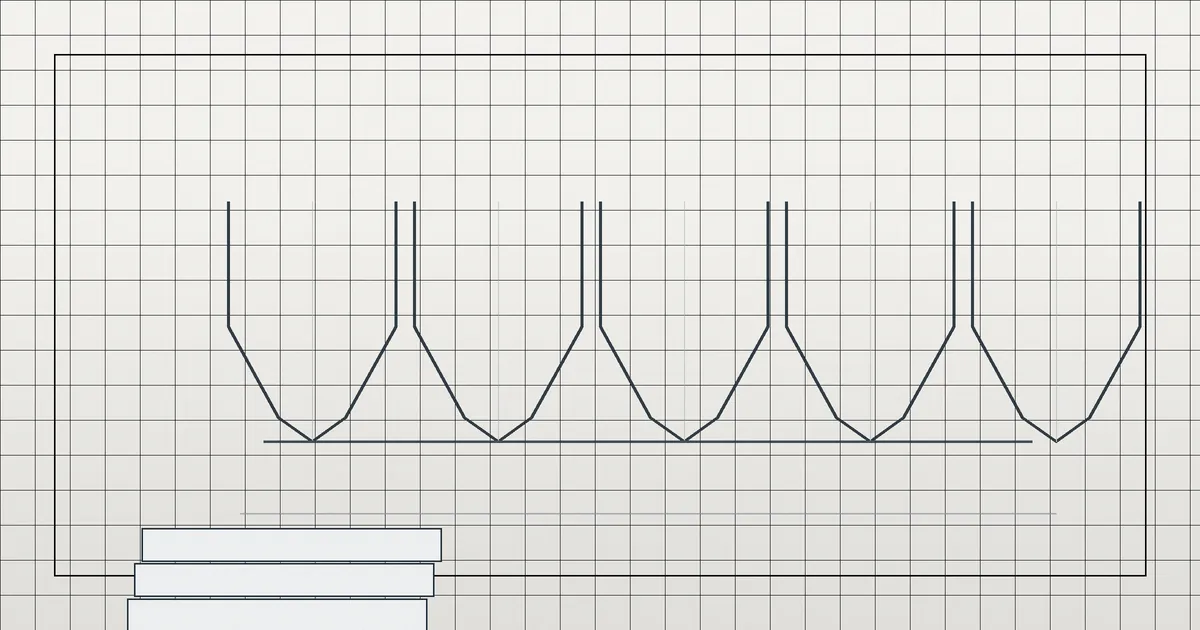
Two boats can have the same length, the same engine and the same price, and behave completely differently in the same sea. The difference is in three numbers that most brochures do not print.
Deadrise: the V under the transom
Deadrise is the angle between the bottom of the hull and horizontal, measured at the transom. A flat-bottomed boat is 0 degrees. A deep-vee offshore hull is 22 to 24 degrees. Our Barka 21 is 16 degrees; the Batinah 27 is 22; the Muscat interceptor is 24.
More deadrise means the hull cuts into a wave rather than slapping it. It also means more wetted surface, more drag, more fuel, and less stability at rest. Every boat is a point on that curve, and no point is correct for every use. A net fisherman who works in sheltered water wants 14 degrees and a flat floor. A rescue crew that runs 30 miles offshore in a swell wants 22 and will pay for it in fuel.
Chine: where the hull stops being a V
The chine is the hard line where the bottom turns into the side. A wide chine carries lift further outboard, which gets the boat on plane at a lower speed and makes it more stable at rest. A narrow chine lets the V run further up the side, which gives a softer ride and less spray.
On our workboats the chine is a single, sharp, welded line. Reverse chines — where the chine turns down to throw water outwards — are available, but they add a place for sand and salt to collect, and on a boat that is beached regularly that matters more than the spray.
Beam: the number that decides the layout
Beam is width, and it decides everything about how the boat is used. A 2.45 m beam gives you a boat that tows easily and fits a normal trailer. A 2.65 m beam gives you 1.9 m of walkaround deck. A 3.0 m beam gives you twin engines and a live well without squeezing the working deck.
Beam is also the number that most often gets pushed past what the trailer, the berth or the harbour permits. We have built hulls 200 mm narrower than the design because that was the width of the customer's slip, and the boat was better for it.
How to read our spec tables
Every boat page lists deadrise at the transom, LOA, beam, draft and dry weight. If you are comparing two of our hulls, start with deadrise and beam and ignore the engine for a moment. The engine decides how fast you get there; the hull decides whether you want to go.
A hull is a set of compromises you can read before you ever get on the water.